
Two Different Parts, Two Different Jobs
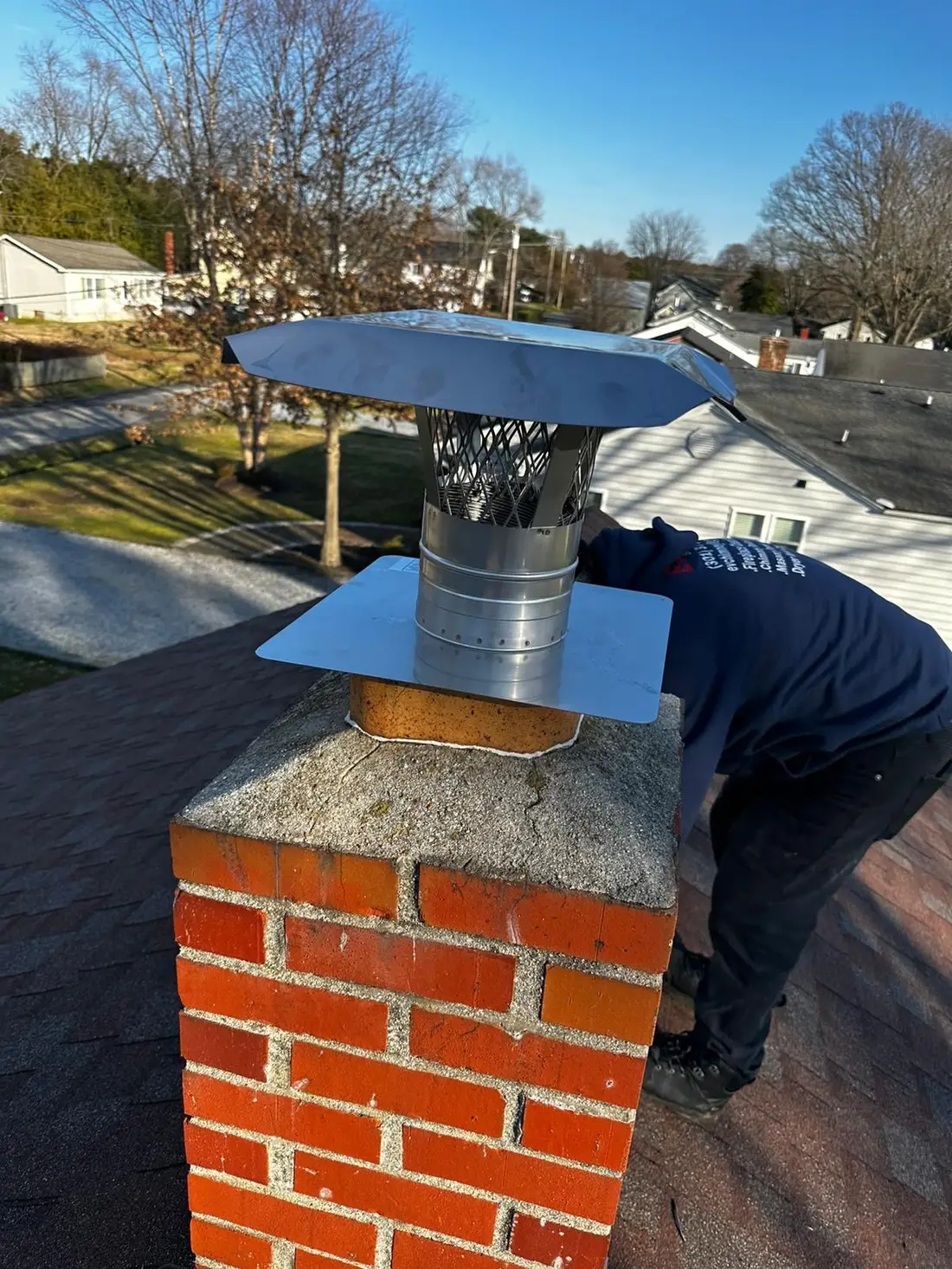
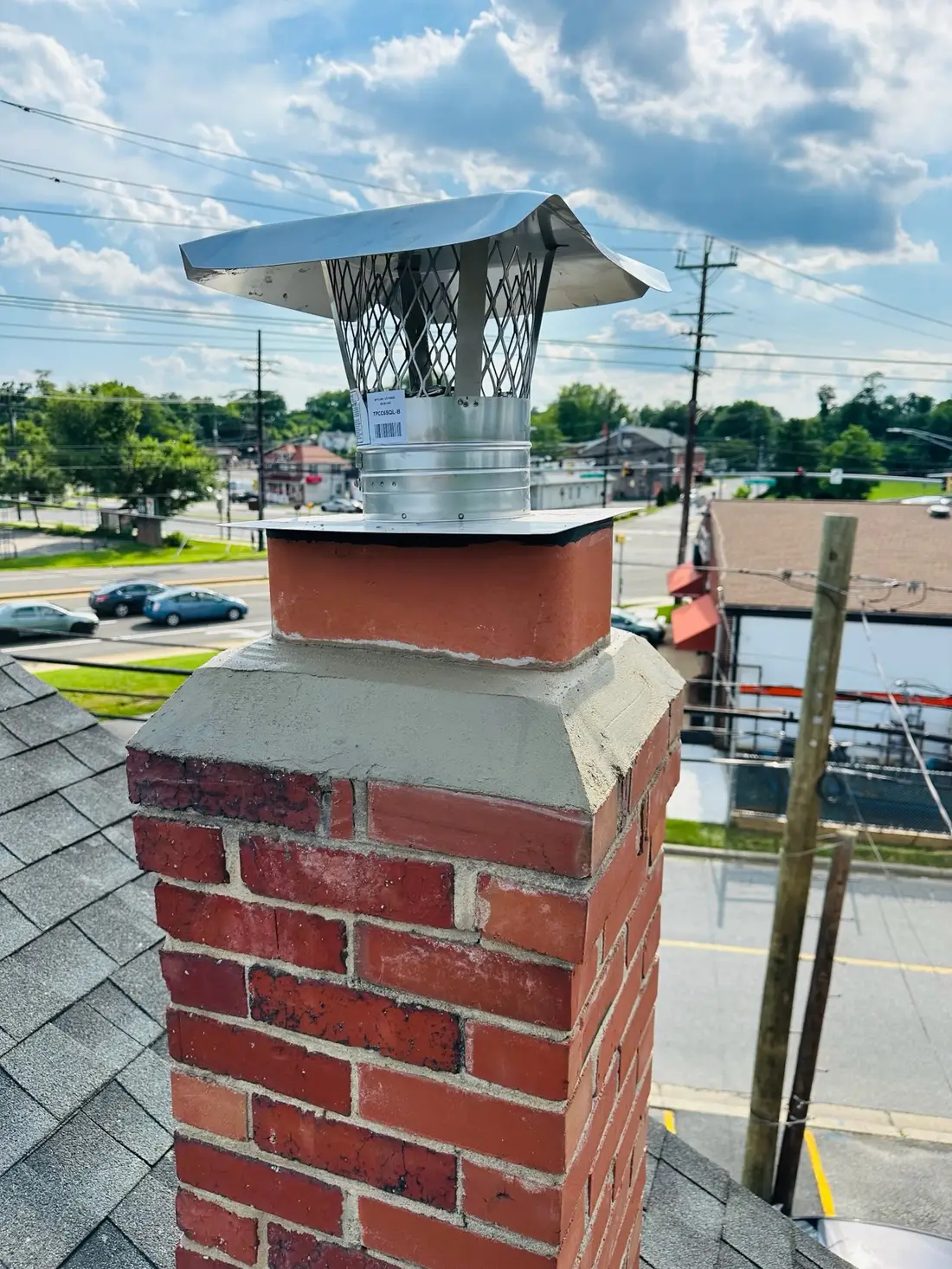
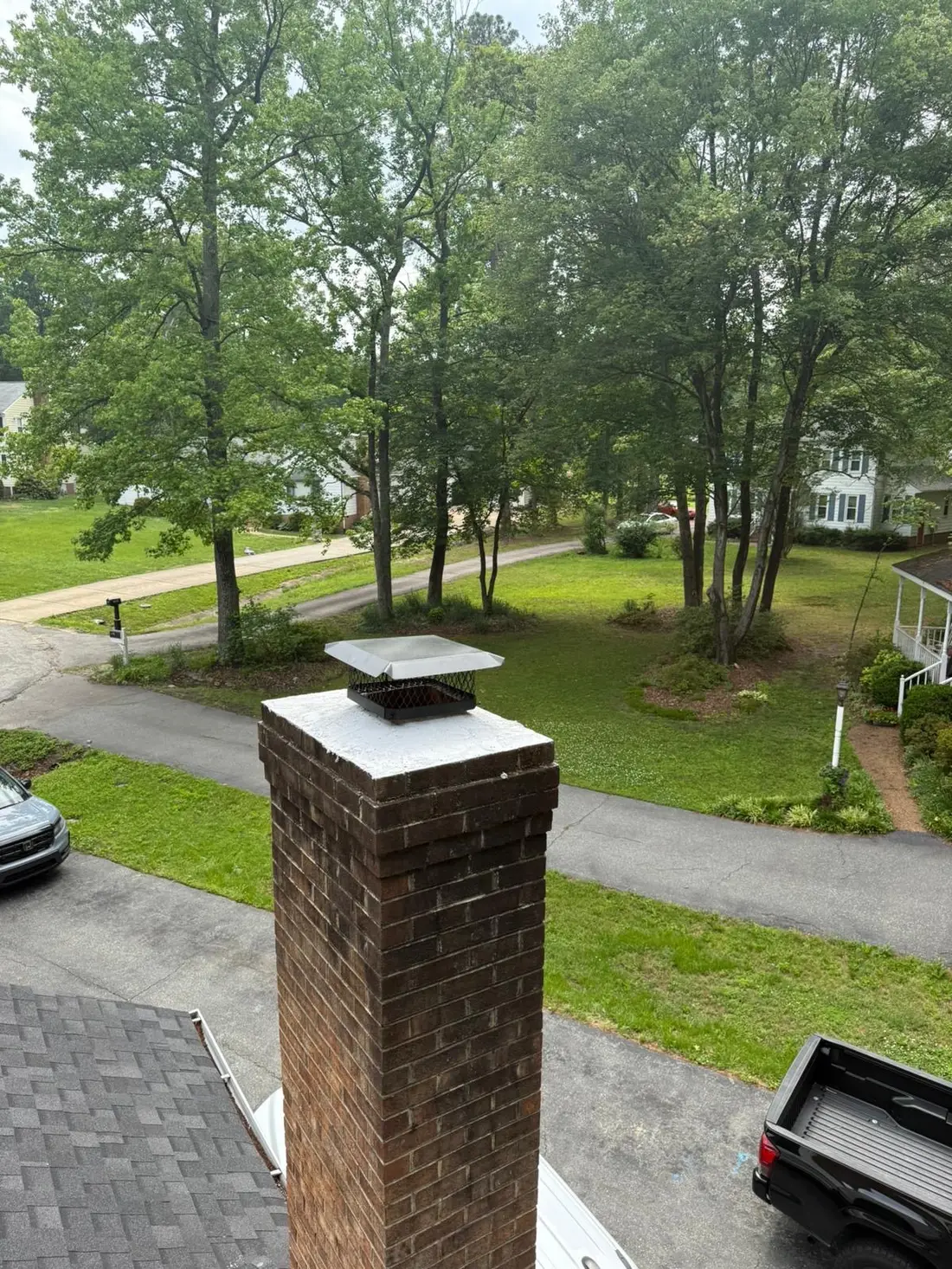
Homeowners often use the words interchangeably, but a cap and a crown do different work. The crown is the masonry or concrete slab that caps the top of the chimney structure itself, sloping outward to throw water clear of the brick below. The cap is the metal cover that sits over the flue opening, with a solid top and screened sides: it stops rain and animals from entering the flue while letting smoke out freely. A chimney needs both in good condition, and a failure in either one eventually damages the other parts of the system.
Many chimneys we inspect have one and not the other — a solid crown with a wide-open flue, or a cap sitting on a crown that has cracked into pieces. Our article making the case for a chimney cap covers the flue side of the story. This page covers both, because the top of the chimney works as a small system of its own, and it is the system that decides how much weather your chimney swallows every year.
What an Open Flue Invites In
An uncapped flue is an open pipe into your home, and the sky uses it. Rain falls straight onto the smoke shelf and firebox, rusting dampers, staining interior masonry, and pooling where it feeds the musty odor so many homeowners notice in summer. Snow does the same work more slowly. Over seasons, that water attacks the liner from inside — the one direction no exterior maintenance can protect against.
Wildlife uses it too. Chimney swifts, raccoons, squirrels, and nesting birds all read an open flue as shelter, and a nest is not a minor inconvenience: it blocks the passage smoke needs, and nesting material inside a flue is a hazard in its own right. Leaves and sticks blow in as well. A screened cap ends all of it at once — the animal entries, the debris, and most of the rain — which is why we consider it basic equipment rather than an accessory. If animals are already in residence, we will talk through humane timing before any cap is fitted.
Crowns: The Chimney's First Roof
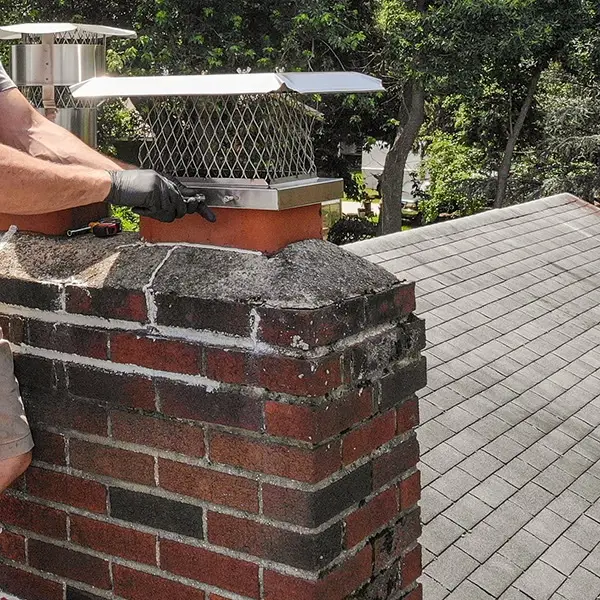
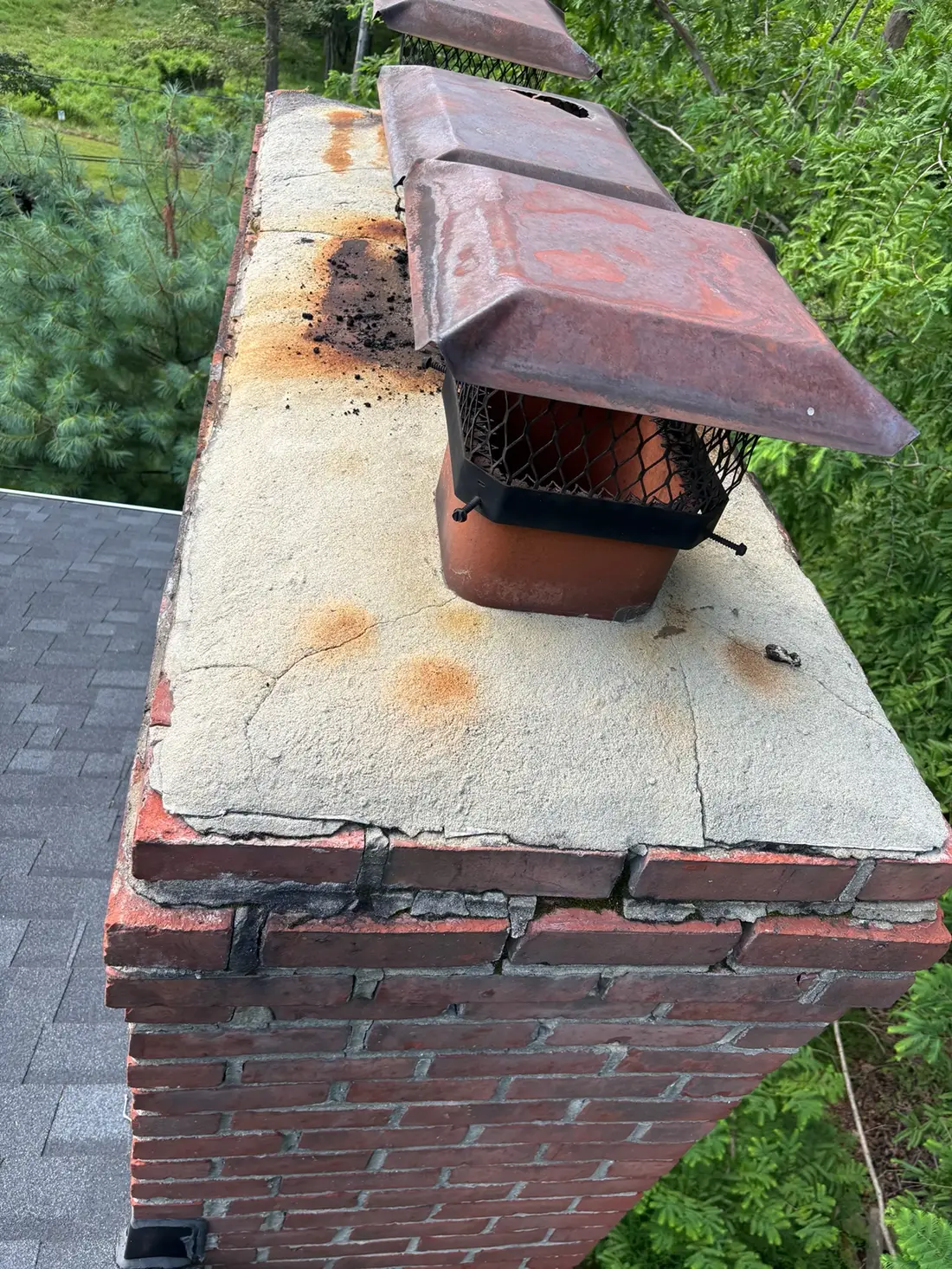
The crown takes the full force of the weather so the brickwork does not have to. A proper crown is built as a sloped, overhanging slab with a drip edge, sealed around the flue so water runs off the top and falls clear of the masonry face. Crowns fail in predictable ways: they crack across the middle, separate from the flue, or were built flat and thin from the start — sometimes little more than a mortar wash that was never going to survive many winters.
Small crown cracks caught early can be sealed with a flexible crown coating that bridges the fissures and sheds water. A crown that has broken into sections, tilted, or lost pieces needs rebuilding, and that work pairs naturally with any masonry repair the top courses need. Either way, the crown decision is made from photographs, with the options and their honest lifespans explained — a coating is a sound repair for the right crown, not a cure for one that has structurally failed.
Choosing and Fitting a Cap
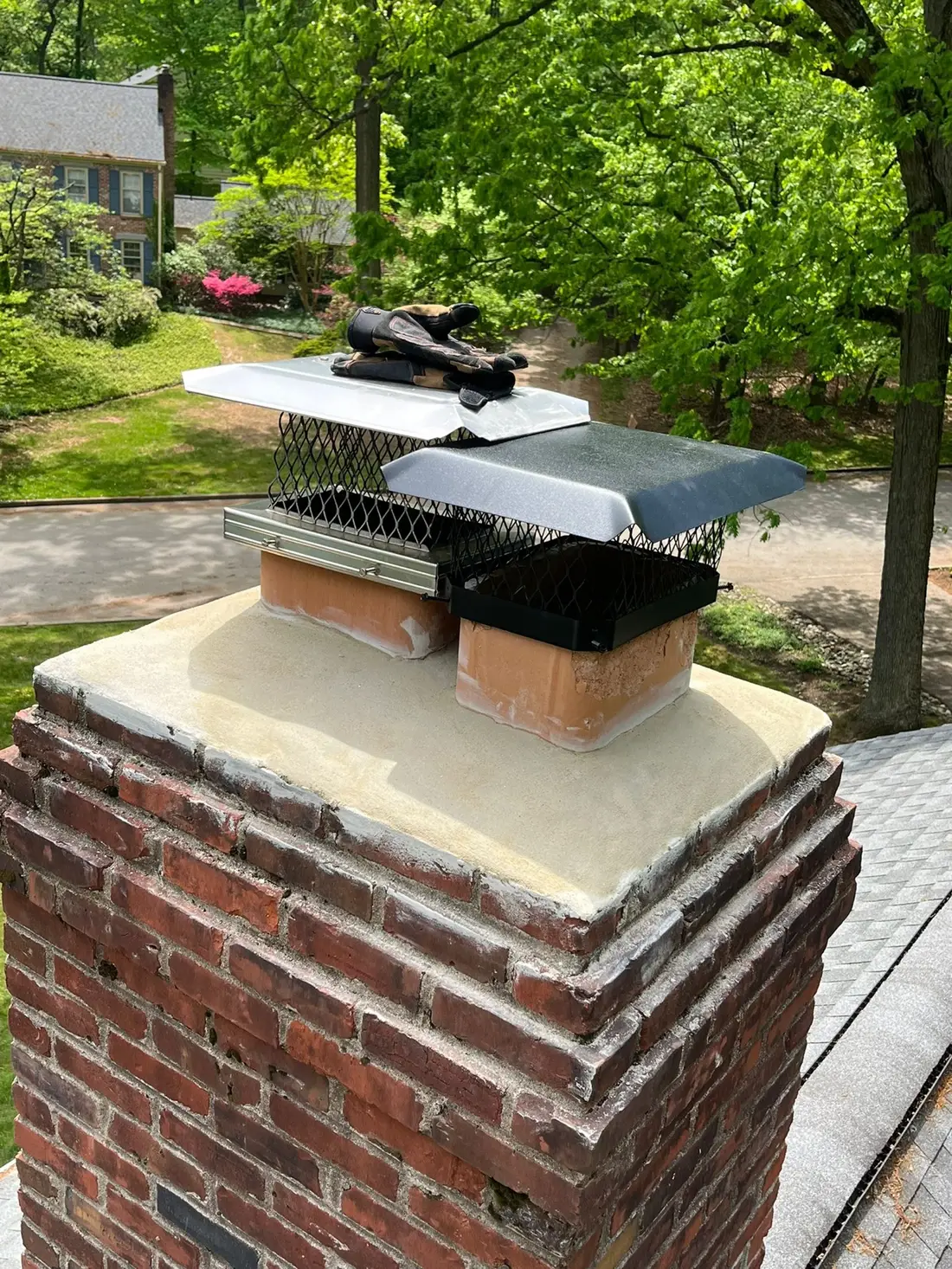
Caps are not one-size equipment. The right cap matches your flue's shape and dimensions — round, square, rectangular, or oval — and suits the number of flues it covers. Single-flue caps anchor to the liner or crown; multi-flue and top-mount caps cover the entire crown and protect every flue at once, which also shields the crown surface itself. Stainless steel is the material we recommend for longevity, because it shrugs off the acidic moisture that exhausts lesser metals, while black galvanized options serve well where budget leads the decision.
Fit is as important as material. A cap that is undersized restricts the flue and can make a fireplace smoke; an oversized or poorly anchored cap rattles in wind and can lift in a storm. Our crews measure on site, confirm the draft clearance above the flue, and fasten the cap so it stays put through the weather your state actually gets. The finished installation is photographed for your records, like everything else we do — evidence first, always.
Spark Arresting and Wind Considerations
The screen on a cap does quiet double duty. Inward, it keeps animals out; outward, it helps contain sparks and embers that rise with the exhaust — a meaningful detail for homes under trees or in dry, fire-aware regions, where some local codes speak directly to screen requirements. Screen mesh sizing is a balance: fine enough to do its jobs, open enough to never restrict draft, and our technicians will flag if creosote is loading the screen faster than it should, since a clogged screen is a draft problem waiting for a cold night.
Wind is the other top-of-chimney variable. Certain rooflines and neighboring structures push downdrafts down exposed flues, and specialty caps exist that use the wind itself to improve draw. If your fireplace smokes mainly on windy days, tell us — that detail points the diagnosis in a specific direction, and our notes on smoke in the room and draft problems explain how wind, height, and house pressure interact at the top of the flue.
A Small Job That Prevents Large Ones
Measured against the repairs it prevents — liner corrosion, firebox rust, masonry spalling, animal removal, water damage in walls and ceilings — cap and crown work is some of the most economical maintenance a chimney ever receives. It is also quick: most cap installations are completed in a single visit, and crown sealing the same, once the assessment is done. Every job is quoted in writing before work begins, with photographs of the existing top included in what you receive.
Eagle Chimney ProTech has protected chimneys from the top down since 2012. We are licensed and insured, with crews organized by state and city across the country, working Sunday through Friday and answering phones 24/7. If you have never seen the top of your own chimney, call us — we will show you photographs of it, and you can decide about caps and crowns with your eyes open.