
How Masonry Chimneys Wear Out
A chimney lives in the harshest spot on the house. It takes rain on all four sides, sun, freeze-and-thaw cycles, and wind, while its inner walls swing between outdoor cold and the heat of every fire. Mortar is the sacrificial layer in that system: it is meant to weather slowly so the brick does not. Over twenty or thirty years the joints recess, crack, and begin to hold water instead of shedding it, and once water moves into the masonry, each winter pries the damage wider.
Brick itself eventually suffers too. Faces flake and pop off in a process called spalling, usually where water has soaked in and frozen. Inside the chimney, the firebox takes direct heat and its mortar joints erode, while the smoke chamber above it — often built with rough, stepped brickwork — collects deposits on every ledge. Understanding which layer has failed, and why, is what separates a repair that lasts from a cosmetic patch.
Tuckpointing: Renewing the Mortar Joints
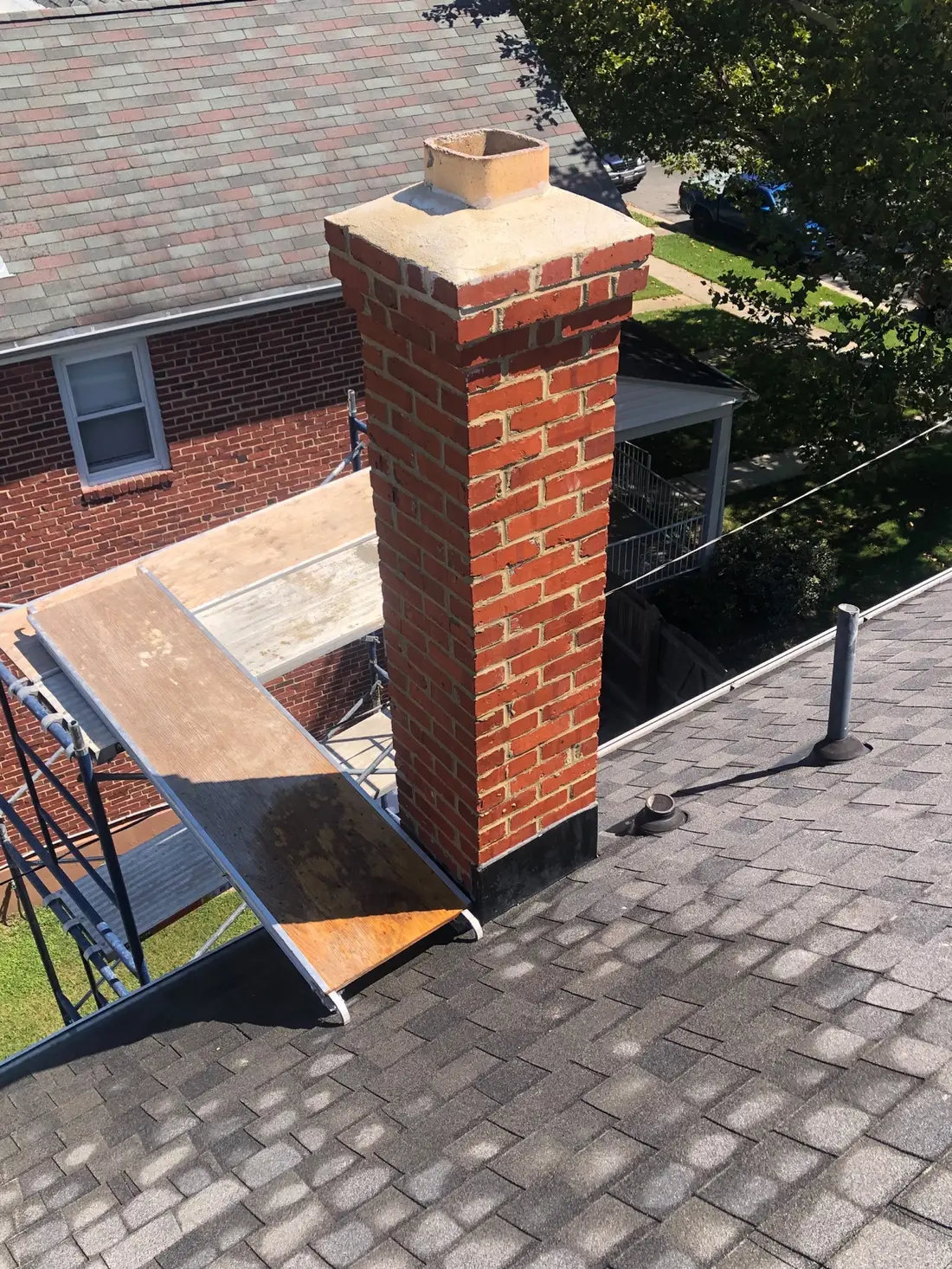
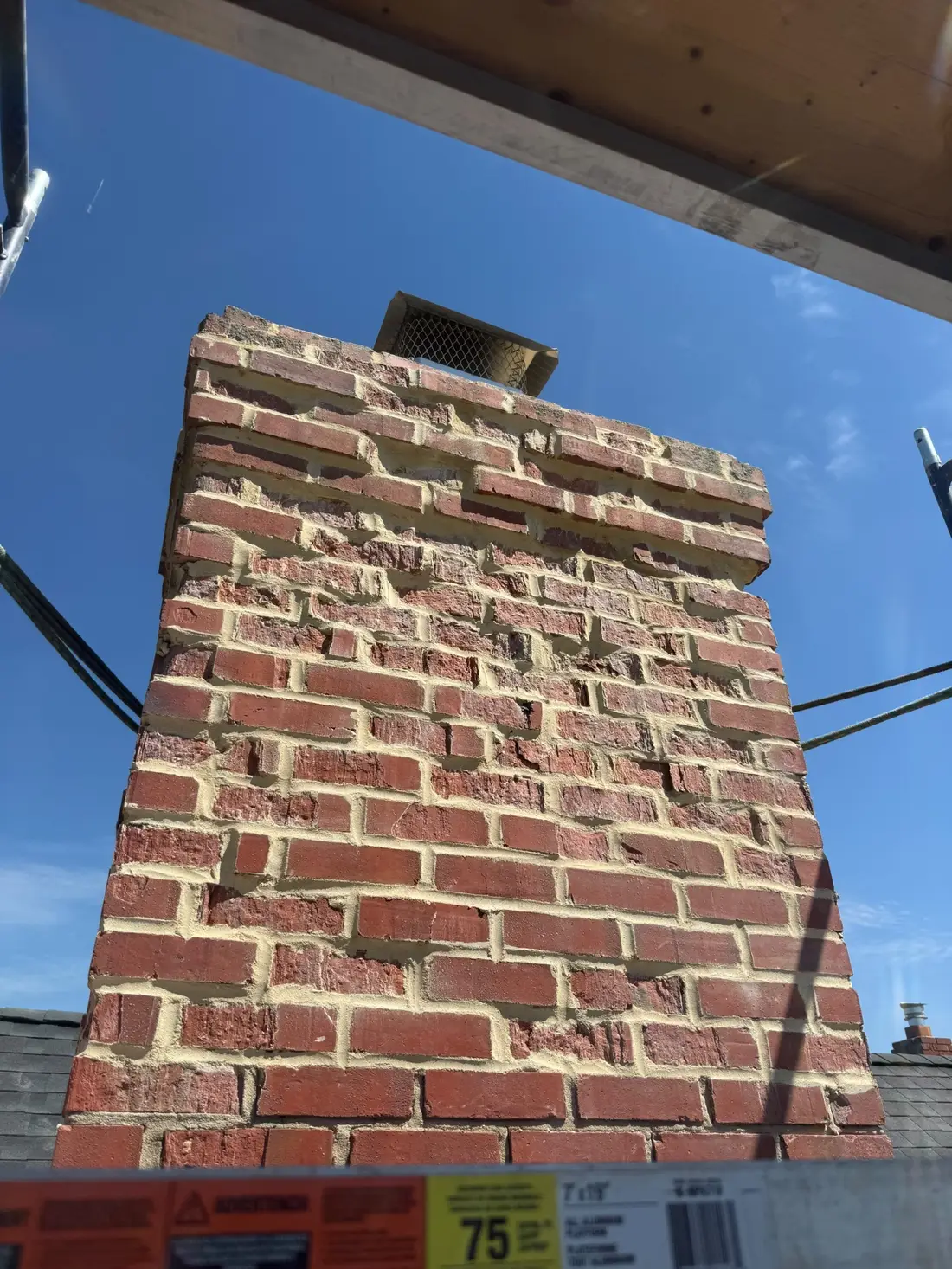
When the brick is sound but the mortar has recessed or crumbled, the correct repair is tuckpointing: grinding out the failed mortar to a proper depth and packing in fresh mortar matched to the original in strength and appearance. Done well, it restores the weather seal of the whole stack and stops the water cycle that was damaging the brick. Done badly — smeared over the surface, or mixed too hard for old brick — it fails early and can damage the masonry it was meant to save.
Our article on tuckpointing and when mortar gives out shows the signs to look for: joints you can dig out with a key, sand piles at the base of the chimney after rain, and gaps you can see from the ground. If your chimney shows those signs, a repointing quote is worth getting sooner rather than later, because the same job grows larger every winter it waits. Tuckpointing is among the most cost-effective repairs in the trade precisely because it protects everything else.
Brick Replacement and Partial Rebuilds
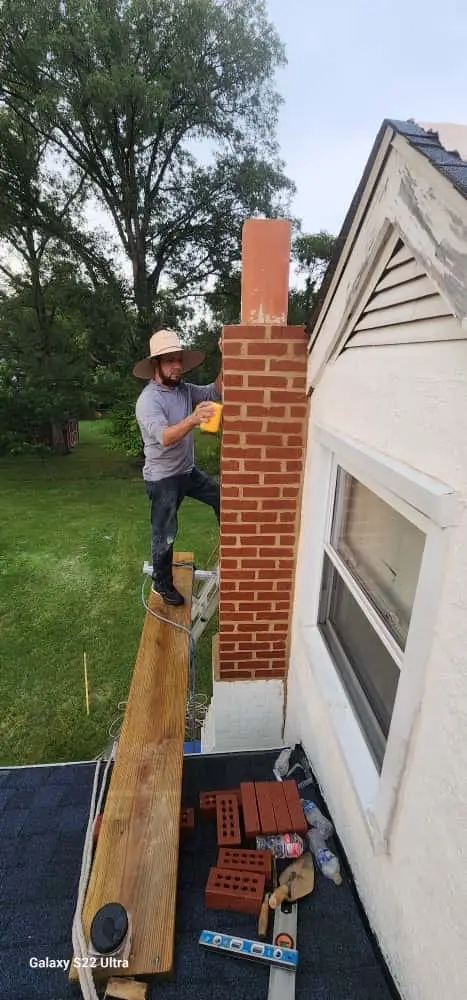
Spalled, cracked, or missing bricks need to come out and be replaced — mortar alone cannot fix a brick whose face is gone. We cut out damaged units, source replacements that match the size, color, and texture of the existing work as closely as modern supply allows, and rebuild the section with proper bonding so the repair weaves into the original wall rather than sitting on it. The top courses below the crown take the worst weather and are the most common site for this work.
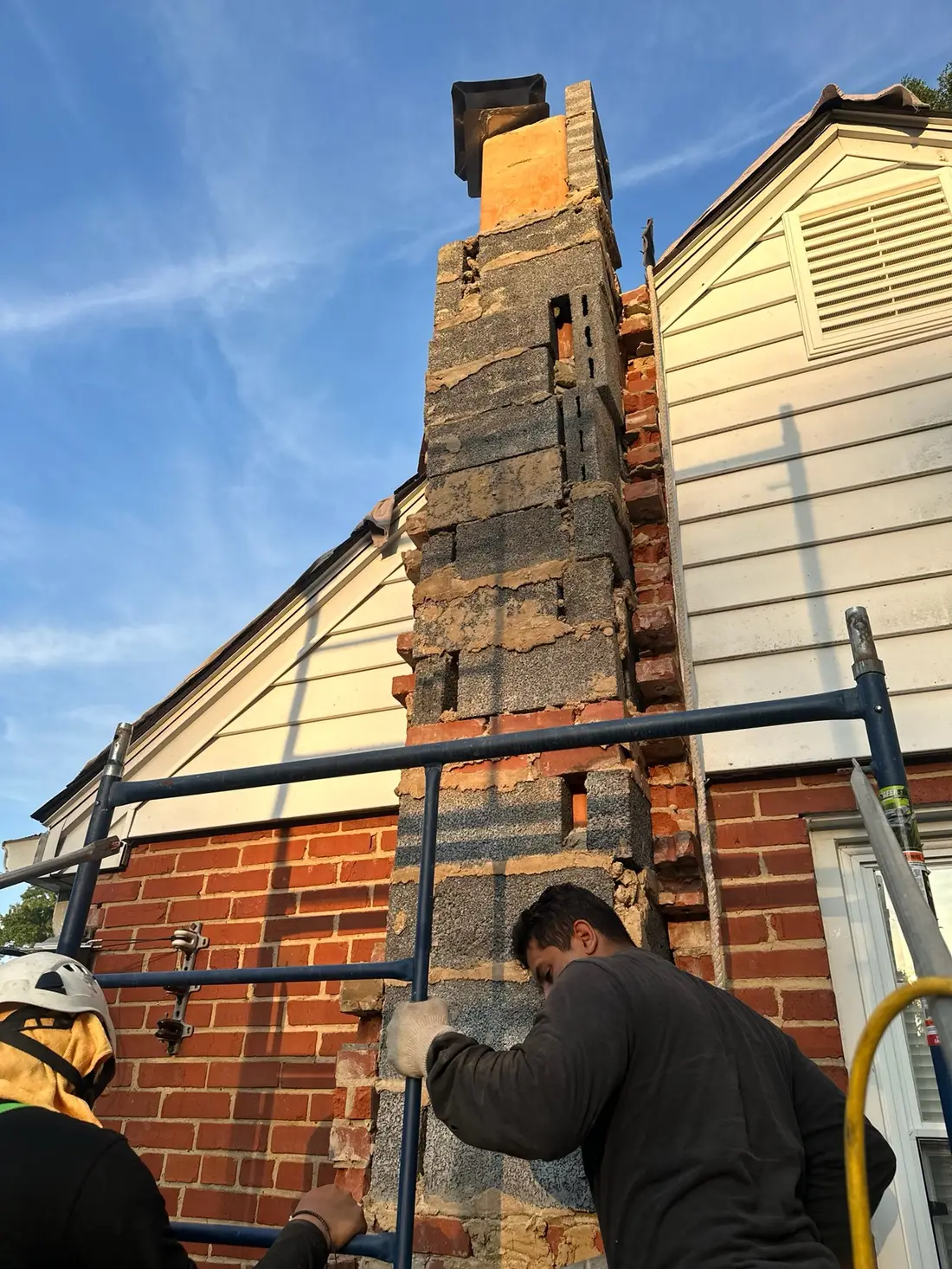
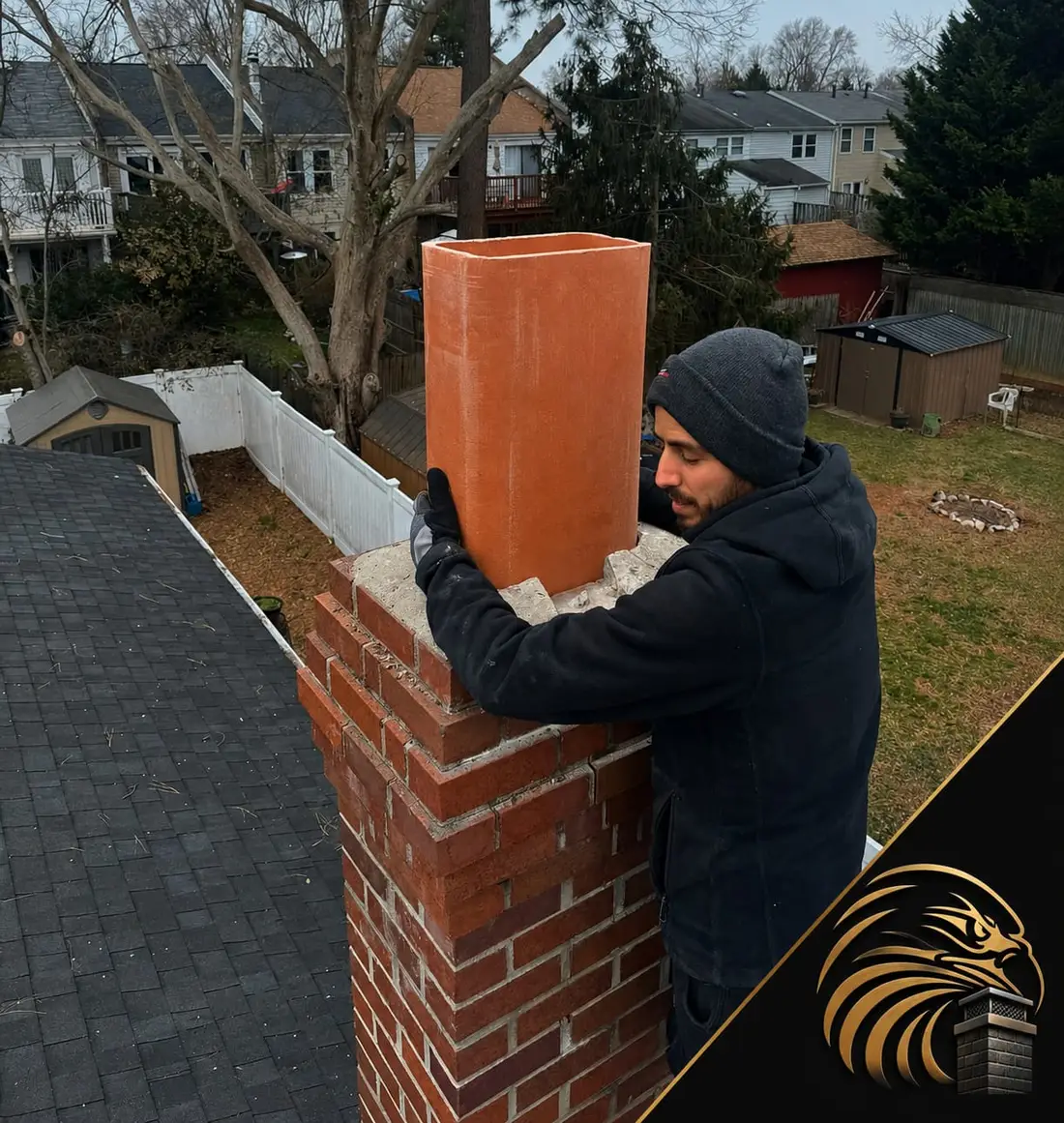
When deterioration runs deeper — a top section that has lost its integrity, a chimney that has begun to lean or separate, or storm and impact damage — a partial rebuild from the roofline up is often the honest answer. We scaffold the work area properly, take the damaged section down to sound masonry, and rebuild it with a new crown and flashing details addressed while the structure is open. Every rebuild is photographed as it progresses, so you can see the condition we found and the work that replaced it.
Firebox, Smoke Chamber, and Interior Repairs
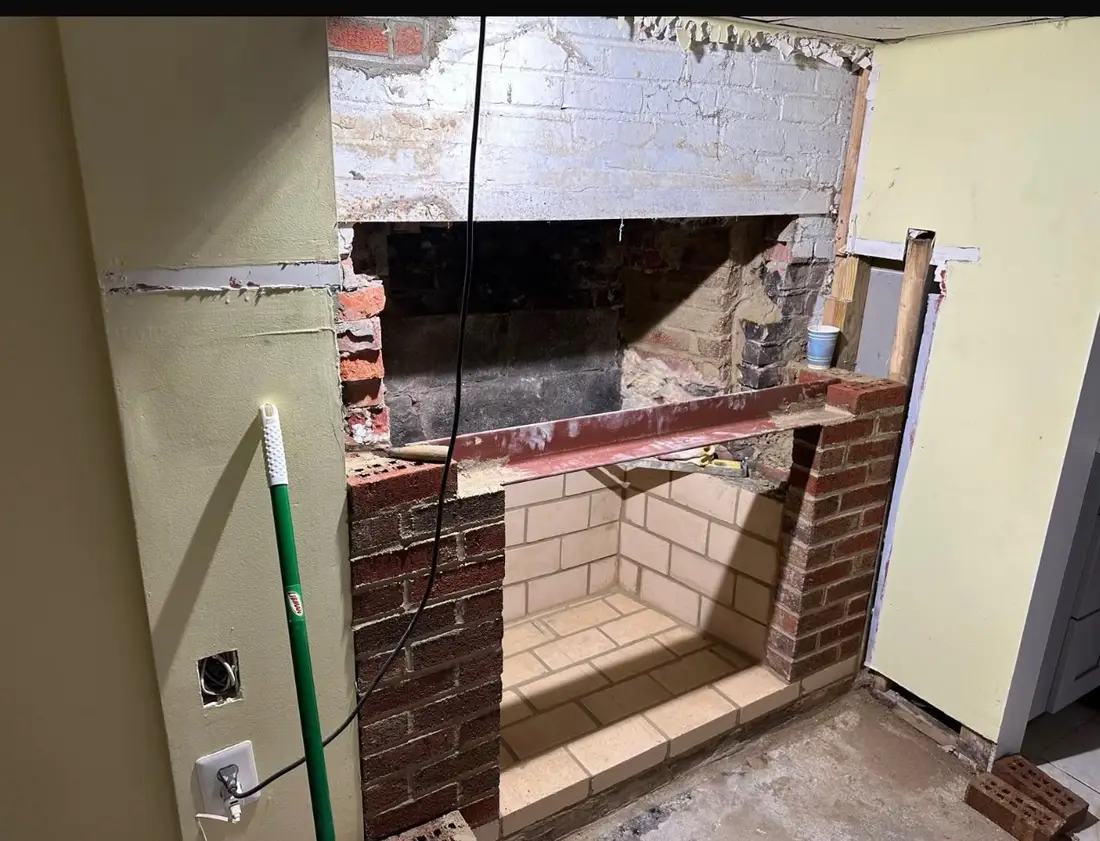
Interior masonry matters as much as the stack outside. Firebox joints erode from heat and from years of logs knocking against the walls; open joints in the firebox let heat reach framing and combustible materials that were never meant to see it. We repoint and rebuild fireboxes with refractory mortar made for the temperatures involved — ordinary mortar does not belong inside a firebox, and using it is a common shortcut we will not take.
The smoke chamber above the firebox is another frequent finding on our chimney inspections. Traditional chambers were often left with corbelled, stepped brick that traps creosote and disrupts the smooth narrowing the smoke needs. Parging the chamber — coating it with a smooth, heat-rated layer — improves draft behavior and removes the ledges where deposits gather. If your fires have always seemed smoky or sluggish, the chamber is one of the first places we look.
Water: The Cause Behind Most Masonry Work
Ask what caused a masonry repair and the answer, most of the time, is water that found a way in years earlier. A cracked crown, a missing cap, failed flashing, or porous, unsealed brick each let moisture into the structure, and freeze cycles do the rest. That is why our repair quotes look at the whole top of the system, not just the visible damage: repairing brick while leaving the water entry open simply schedules the next repair. Our guide to where water gets into a chimney maps the usual routes.
Protection at the top — sound caps and crowns, correct flashing, and breathable water repellent where the masonry calls for it — is what makes a repair last. We will explain which of those your chimney has, which it lacks, and which matter most in your climate. In freeze-heavy regions the crown and cap do the heaviest lifting; in wet coastal areas flashing and repellents earn their keep. Local crews who work your state's weather every season know the difference.
Quoted in Writing, Explained in Plain Language
Every masonry job from Eagle Chimney ProTech is quoted in writing before work begins, with the scope spelled out: what comes out, what goes in, and what the finished work should look like. If we open a section and find conditions different from what anyone could see beforehand, we stop, photograph it, and talk with you before the scope changes. No surprises added silently to a bill — that rule has held since 2012.
We are licensed and insured, our masonry crews are organized by state and city nationwide, and we work Sunday through Friday with phones answered around the clock. If your chimney is shedding mortar, growing cracks, or showing its age, call us for an assessment. You will get photographs, a written quote, and a straight explanation of what your chimney needs — and what it does not.