
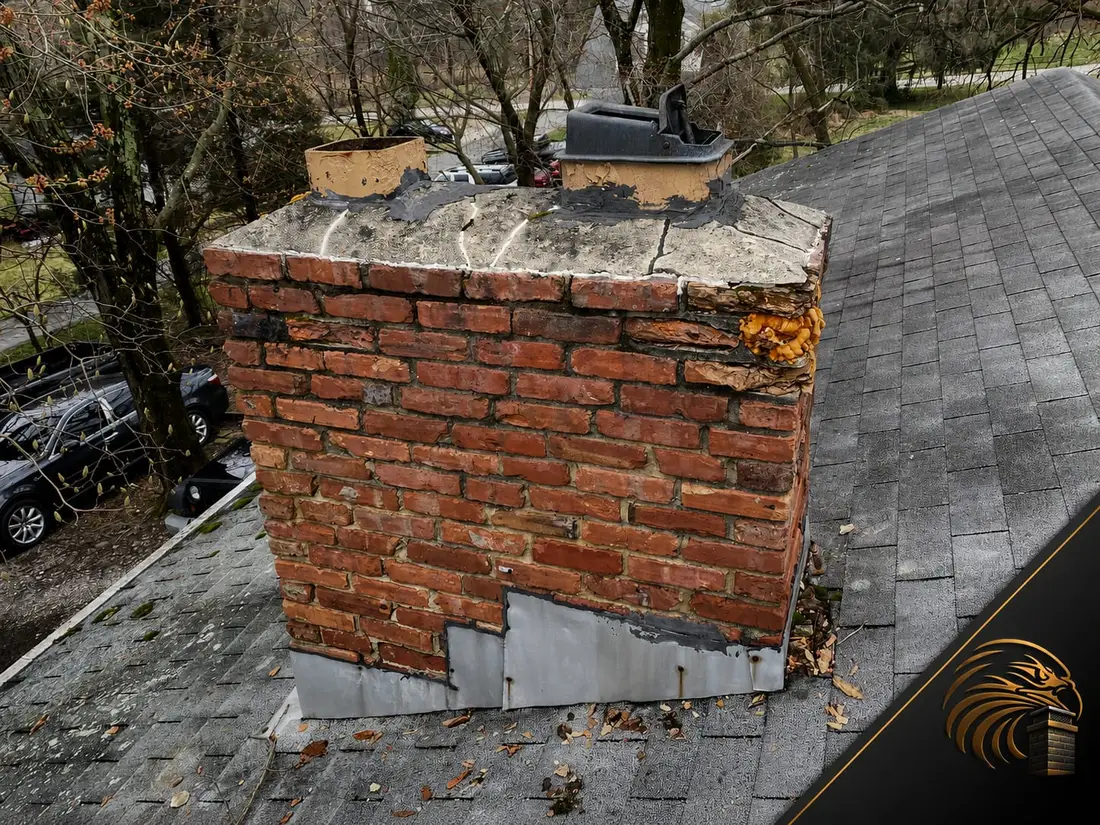
Water is the chimney's most patient enemy. Heat comes and goes with the seasons, but moisture works all year, freezing and thawing in mortar joints, rusting dampers and caps, staining ceilings, and quietly softening masonry from the inside. When a leak appears in the room below, the water has usually been entering for a long while at a point far above the stain. Nearly every chimney leak traces back to one of five entry points, and finding the right one is the difference between a lasting repair and a recurring stain.
One: The Crown at the Very Top
The crown is the concrete or mortar cap that covers the top of the masonry stack and sheds water away from the flue. Crowns live a hard life in full sun, wind, and freeze-thaw cycles, and they commonly crack along their surface or pull away at the edges. Even a hairline crack is an open door: rain enters, freezes, widens the crack, and admits more rain. Water that enters here often shows up as damage high on the chimney or dampness inside the flue itself.
A sound crown slopes gently to shed water, overhangs the masonry slightly, and is sealed around the flue. Repairs range from sealing and resurfacing a basically sound crown to rebuilding a failed one, and the right choice depends on how far the cracking has gone, something a close look during a chimney inspection settles quickly.
Two: Flashing Where Chimney Meets Roof
Flashing is the metal work that seals the joint between the chimney and the roof, one of the busiest intersections on any house. When flashing rusts, lifts, or was installed without proper counter-flashing set into the mortar, wind-driven rain finds the seam and follows it indoors. Leaks from flashing often appear as stains on ceilings or walls near the chimney, sometimes several feet from the stack itself, which is why they are so often misdiagnosed as roof leaks.
Sealant smeared over failing flashing is a temporary patch at best. A lasting fix means repairing or replacing the metal properly and tying it into both the roofing and the masonry, the kind of chimney repair and masonry work that addresses the joint rather than covering it.
Three: A Missing or Failed Cap
An open flue is an open pipe into your home. Rain falls straight in, snow accumulates, and animals and leaves follow. Inside, that water rusts the damper, streaks the firebox, and soaks deposits in the flue, which is one reason unused chimneys develop strong summer odors, a topic we cover in our article on summer chimney smells. A sound cap with a sturdy screen stops the direct route entirely while still letting the flue breathe and draft.
Four: Tired Mortar and Brick
Masonry is not waterproof; it is water-managed. Sound mortar joints shed most rain, but as joints erode and recess, they begin to hold water instead. Brick faces that have started to spall, popping and flaking in freeze cycles, absorb even more. A saturated chimney can leak simply by soaking through during a long, wind-driven storm, with no single hole to point at. The fix is repointing failed joints and addressing damaged brick, followed in suitable cases by a breathable water repellent made for masonry, never a sealing film that traps moisture inside.
Five: The Liner and the Interior Path
Sometimes water's damage is discovered inside the system: a rusted damper that no longer seals, efflorescence or damp patches on interior masonry, or moisture appearing in the firebox after rain. Cracked liners and open joints can let driven rain and condensation travel where they should not, and heavy creosote deposits absorb moisture and hold it against the flue walls. These interior signs are why a complete diagnosis looks at the whole system, top to bottom, instead of only the spot above the stain.
The pattern in all five cases is the same: find the entry point, repair it properly, and let the structure dry. At Eagle Chimney ProTech, leak work begins with documented findings, camera images where the interior is involved, and written quotes before repairs begin. Local crews across the country have handled these five culprits since 2012, and the honest order of operations is always diagnosis first, repair second, and no pressure in between. Addressed at the source, a chimney leak is a solved problem rather than a recurring season ritual.