
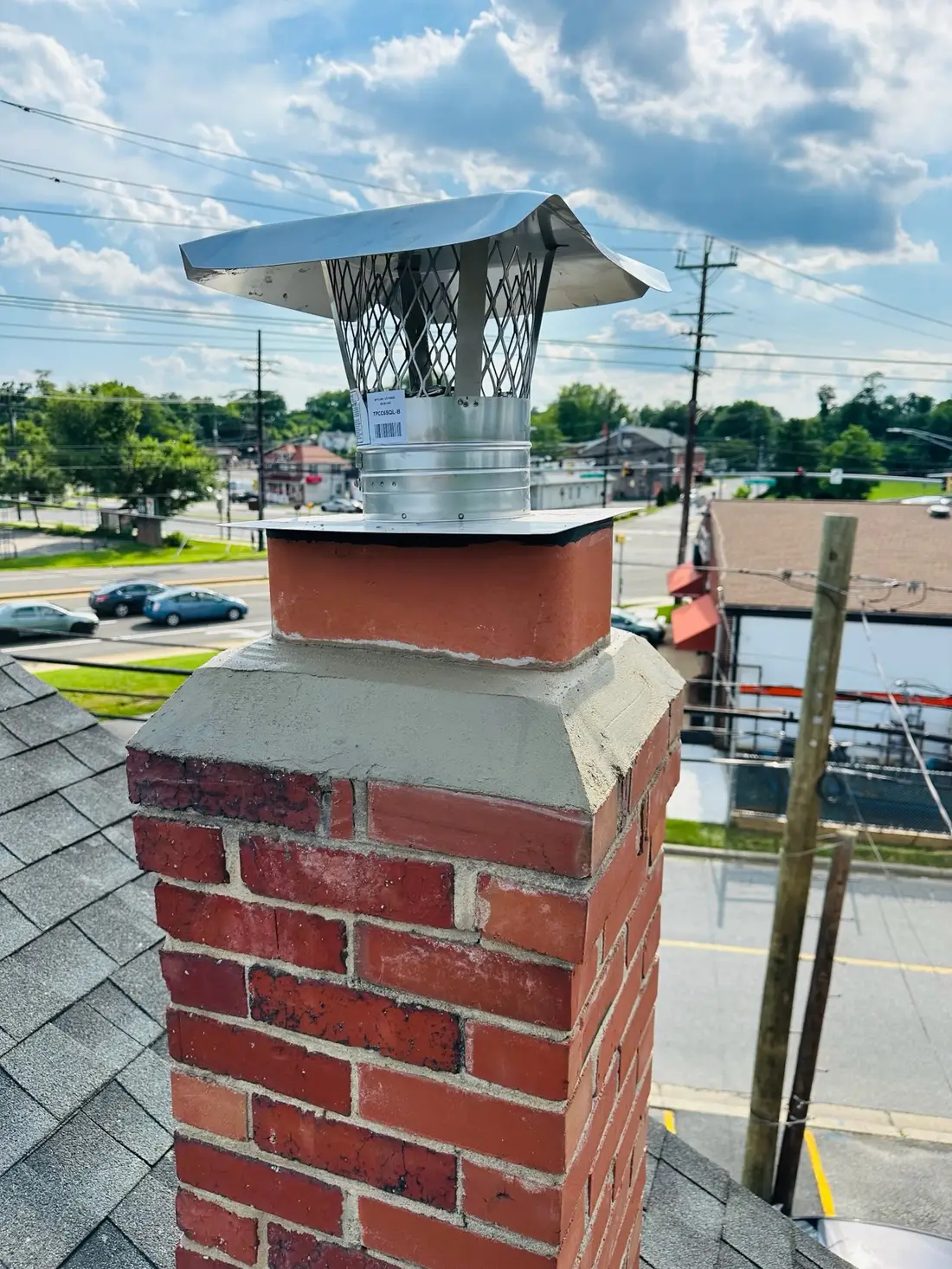
Of all the parts of a chimney system, the cap is the easiest to overlook and the hardest to justify skipping. It is a modest piece of metal sitting at the very top, yet it stands guard over everything below it: the liner, the damper, the firebox, and the interior of your home. An uncapped flue is, quite literally, an open hole in the roof, and nature treats it exactly that way. Here is what a good cap does, what happens without one, and how to think about choosing the right style for your chimney.
Keeping Water Out of the Flue
Rain that falls into an open flue does not evaporate politely. It soaks into deposits on the flue walls, rusts the damper and any metal components, streaks and weakens the firebox, and in masonry systems works into the structure around the liner. Over seasons, that steady wetting is a major contributor to the interior damage described in our guide to where chimney water gets in. A cap sheds that rain off the top while leaving the flue opening itself clear for smoke to exit.
Snow matters too, particularly where it can accumulate and melt slowly into the system. The cap's lid handles both, and its overhang also protects the crown's edge, the joint where the flue meets the top of the stack, from direct weather beating.
Keeping Animals and Debris Out Too
To a raccoon, squirrel, or nesting bird, an open chimney looks like a hollow tree: warm, sheltered, and safe. Animals in a flue are more than a nuisance. Nests block the passage and create a fire and smoke hazard, animals can become trapped and die in the system, and in many areas certain nesting birds are protected, which limits when a nest can legally be removed. A cap fitted with a sturdy mesh screen closes that door before anything moves in.
Leaves, twigs, and wind-blown debris are the quieter version of the same problem. They collect on the smoke shelf and in the flue, restrict draft, and add fuel where fuel does not belong. The screen keeps the bulk of it out, season after season, with no effort from the homeowner.
Draft, Sparks, and Everyday Manners
A well-designed cap can also improve how a chimney behaves on windy days. Certain wind patterns push air down an open flue, causing downdrafts that puff smoke and odor into the room; a cap's lid and band deflect much of that effect. Meanwhile the screen serves as a spark guard, helping contain embers that ride the draft upward, a small but real courtesy to your roof and your neighbors' yards.
None of this interferes with normal use. Smoke exits freely around and through the cap's design, and the fireplace or stove drafts as intended. If a home already struggles with smoke problems, that is a separate diagnosis, covered in our article on smoke in the room and draft problems, and a cap alone should not be sold as the cure.
Choosing and Fitting the Right Cap
Caps come in stainless steel and copper as the durable choices, with galvanized versions at the lower end that typically rust out far sooner. Stainless is the workhorse recommendation for most homes: it resists the heat, moisture, and corrosive deposits at the top of a flue for many years. Sizing matters as much as material. A cap must fit the flue or the full masonry top correctly, sit securely against wind, and leave proper clearance so draft is never restricted.
Some chimneys carry two or three flues under one crown, and options range from individual caps per flue to a single top-mount cap covering the whole stack, which also shields the crown itself. Our chimney caps and crowns page walks through those configurations. At Eagle Chimney ProTech, caps are recommended based on what the top of your chimney actually looks like, measured and fitted by local crews, and quoted in writing with no pressure to decide on the spot.
A Small Part With an Outsized Job
No single component prevents every chimney problem, but few prevent so many for so little. Water damage, animal invasions, debris blockages, downdraft puffs, and stray sparks all meet their first obstacle at the cap. If your chimney has never had one, or the old one is rusted, tilted, or missing after a storm, replacing it is among the simplest protective steps in all of chimney care, and a fine companion to regular sweeping and inspection.